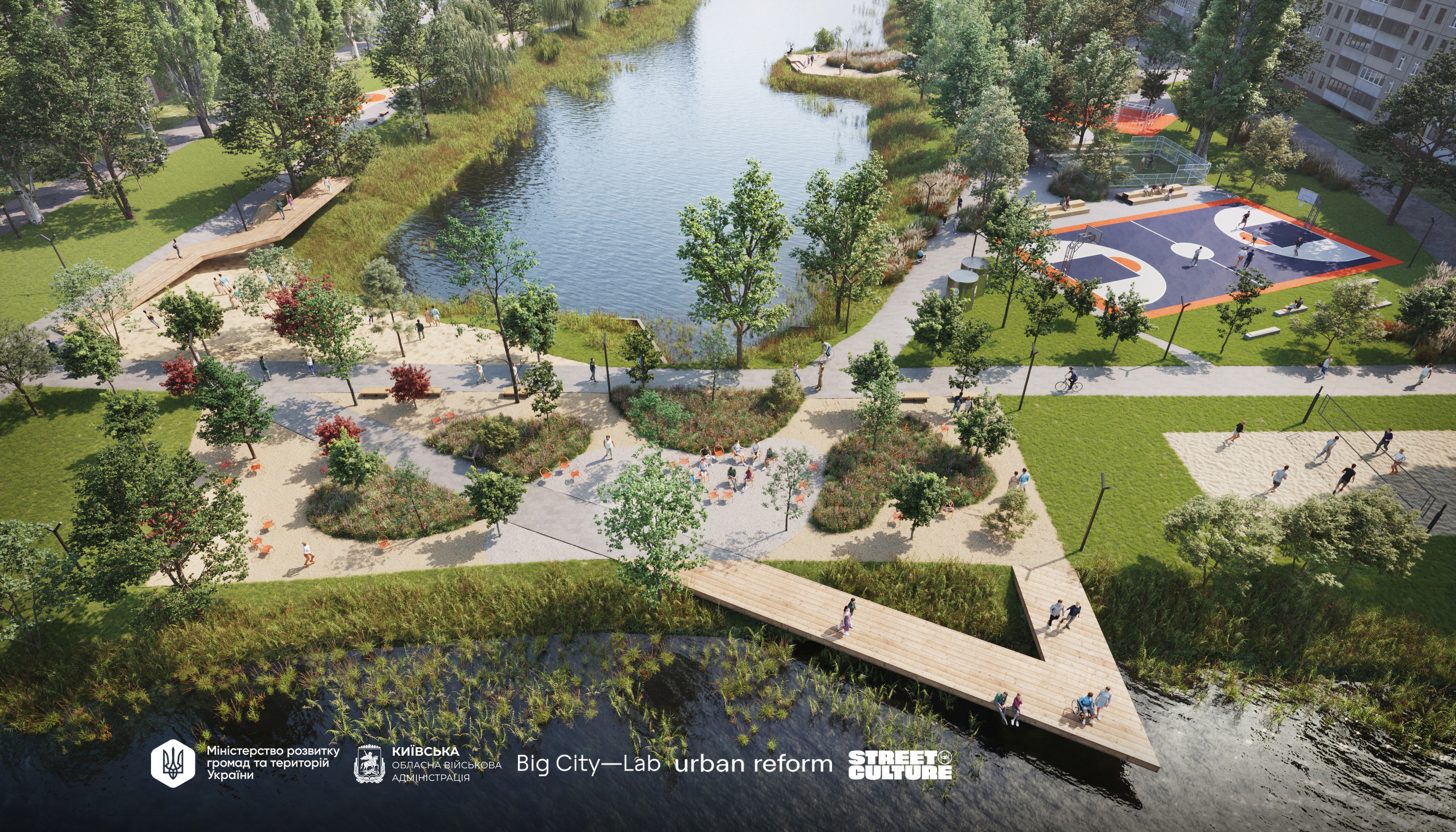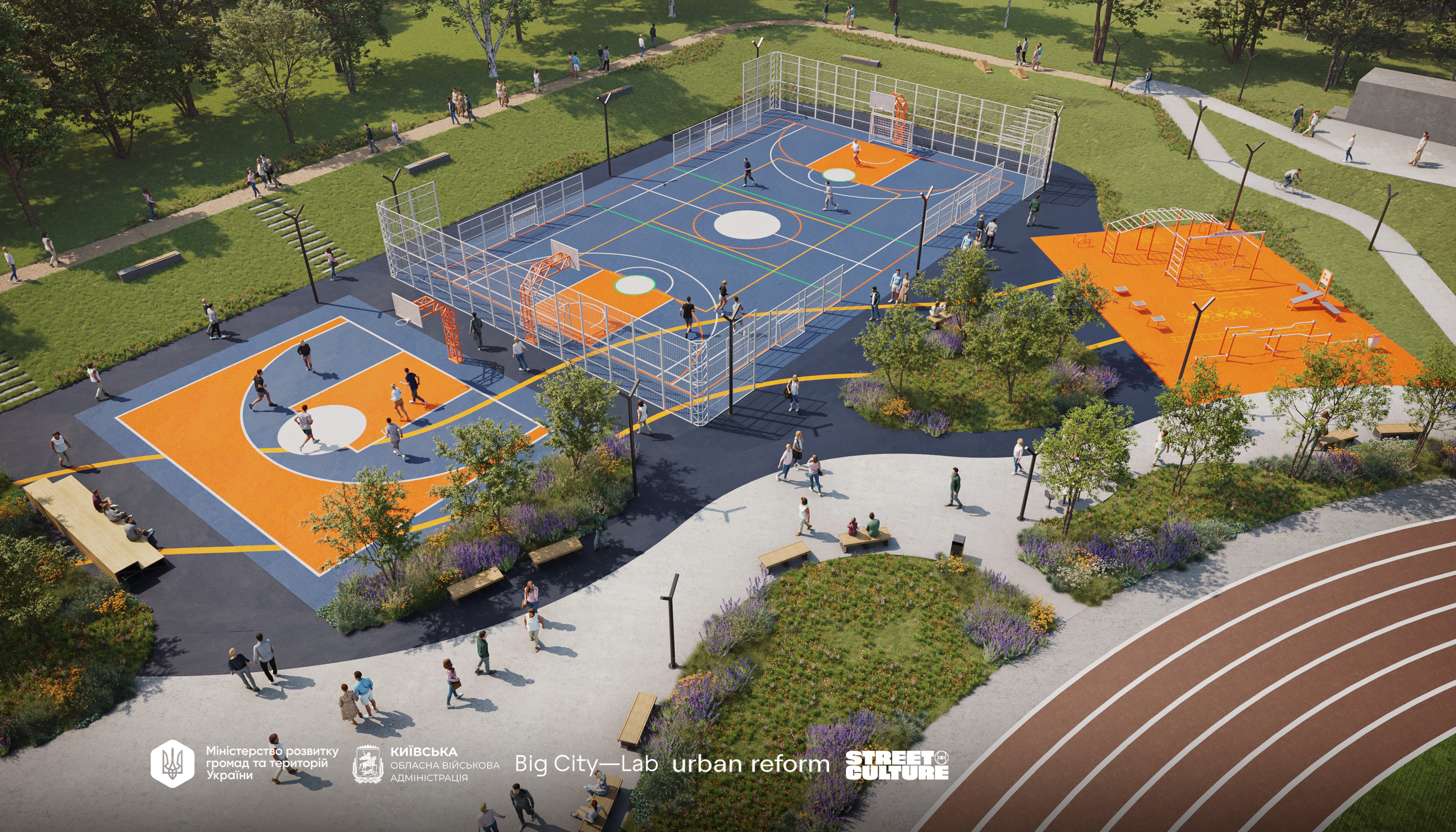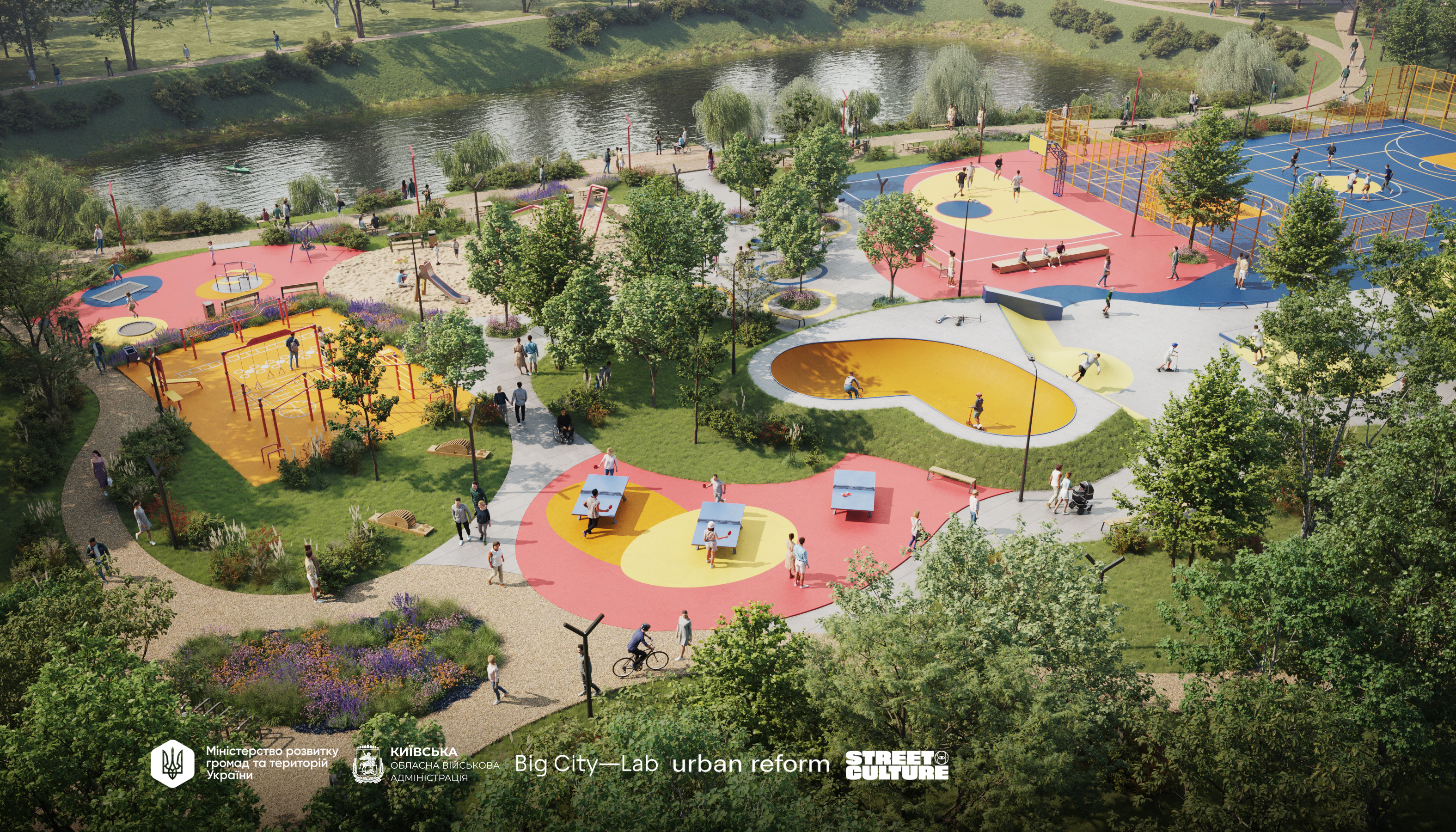
Active Park // Vyshneve
The project is being implemented as part of the President of Ukraine's Active Parks programme and is being carried out by the Kyiv Regional Military Administration and the Vyshneve City Council in conjunction with The Ministry for Communities and Territories Development of Ukraine. The project was developed and implemented by the teams of Big City Lab, Urban Reform and the Street Culture platform.
The Active Park in Vyshneve is a new space for sports, recreation and meetings, where teenagers, young people and all local residents can spend their time.
Community unity is born in places like this: they add energy to cities and give people a sense of support.
Relevance
The Active Park will be located in the central part of the city, next to an existing park. Nearby are multi-storey buildings, schools, kindergartens and a stadium.
Vyshneve has a population of 70,000, with about a third of residents living within a 15-minute walking distance. Several neighbouring settlements are within a 30-minute bike ride. This makes the Active Park accessible not only to residents of Vyshneve, but also to nearby villages.
Currently, the location where the park will be created is a transit area for public use: there are scattered trees, dirt roads and paths. This space is not used because it is cluttered.
The Active Park will complement leisure activities in Vyshneve and improve the city's sports and recreational facilities.
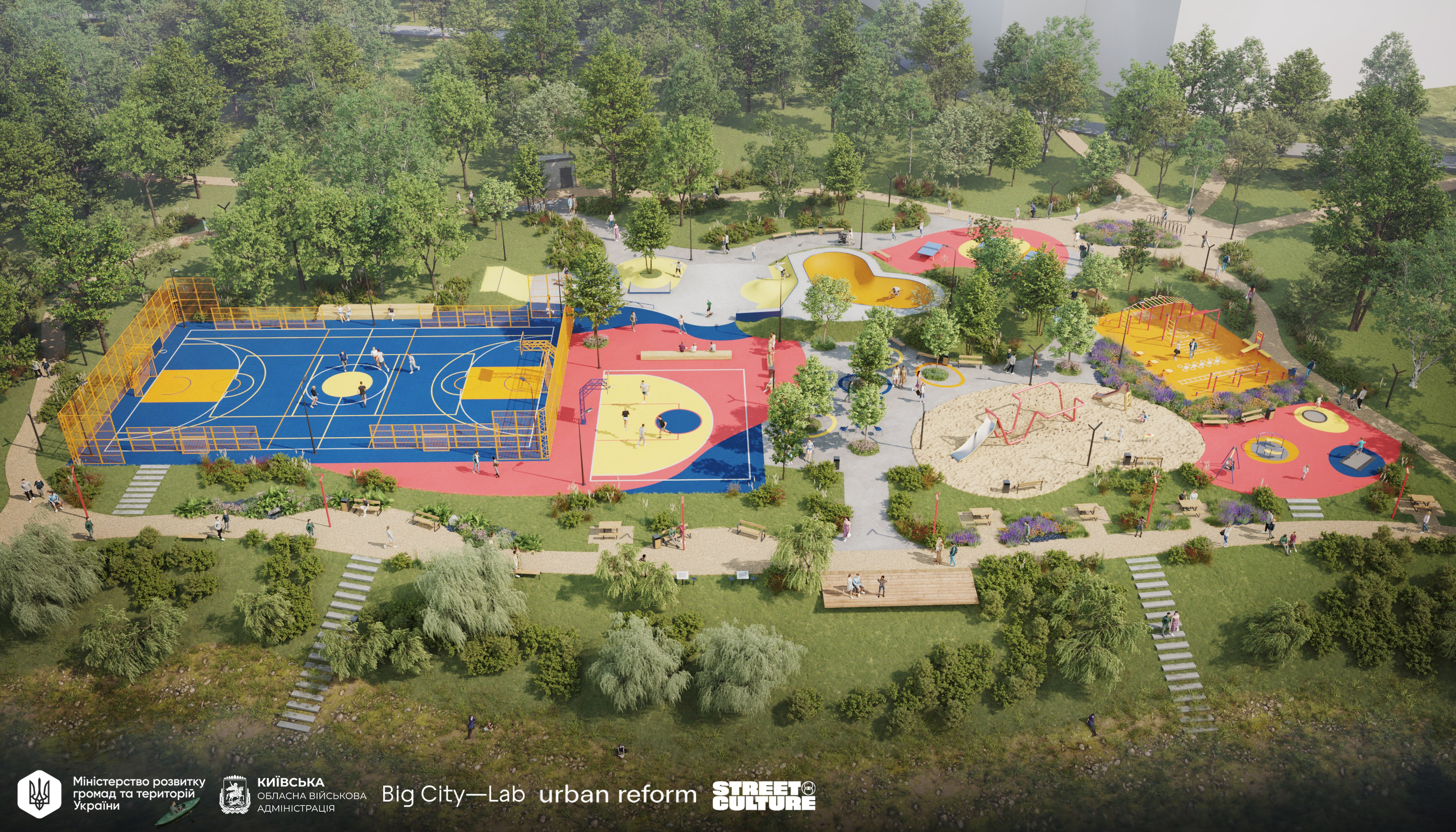
Zoning
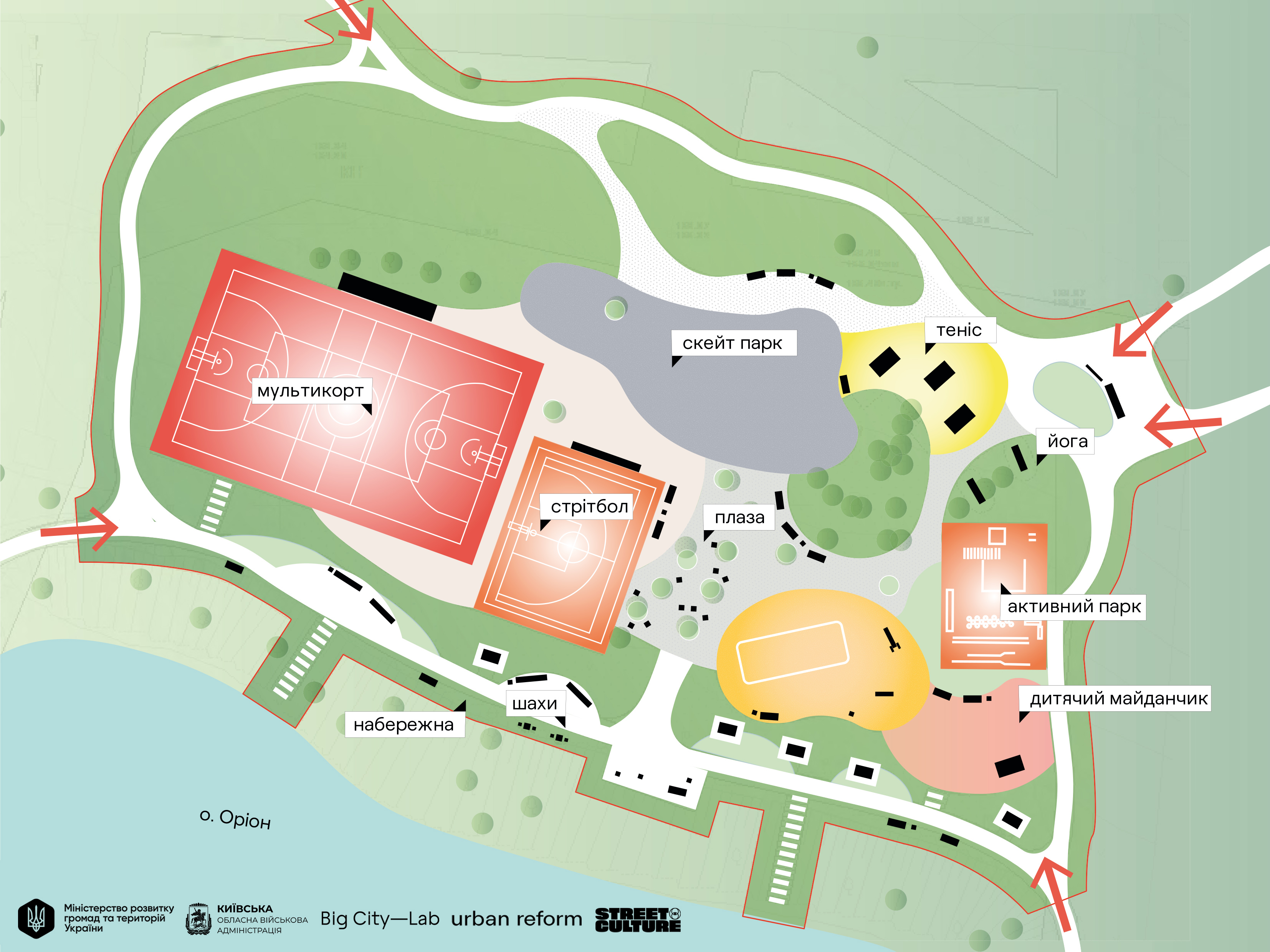
What will be in the Active Park:
- A multi-court that will combine volleyball, badminton, 5x5 & 3x3 street football, and 5x5 basketball
- A concrete skate park for skateboarding, stunt scooters, BMX bikes and rollerblades
- A 3x3 streetball court
- Space for fitness and street workout
- Yoga area
- Tables for table tennis
- Children's playground
- Area with tables for chess/checkers
In the centre of the park is a plaza where meetings and events can be held. And throughout the space, there are places to relax.
{{slider-75="/sliders"}}
Context
Today, the Kyiv region is undergoing comprehensive reconstruction: not only critical infrastructure and housing are being restored, but also spaces that provide people with a high quality of life.
One of the key elements of this process is public locations for children, teenagers and young people. For example, sports facilities where people can spend time from morning to evening: they create space for development and sports, help maintain mental health, and become meeting places. In addition, such places help to actively involve veterans and new residents in the community.
Construction of the park began in October 2025.